Supervisor: prof. Cristiano De Marchis
European Research Council (ERC):
PE7_7 PE7_9
Laboratory Location:
Block A, 2nd Floor, Room 204
Laboratory Brief Description:
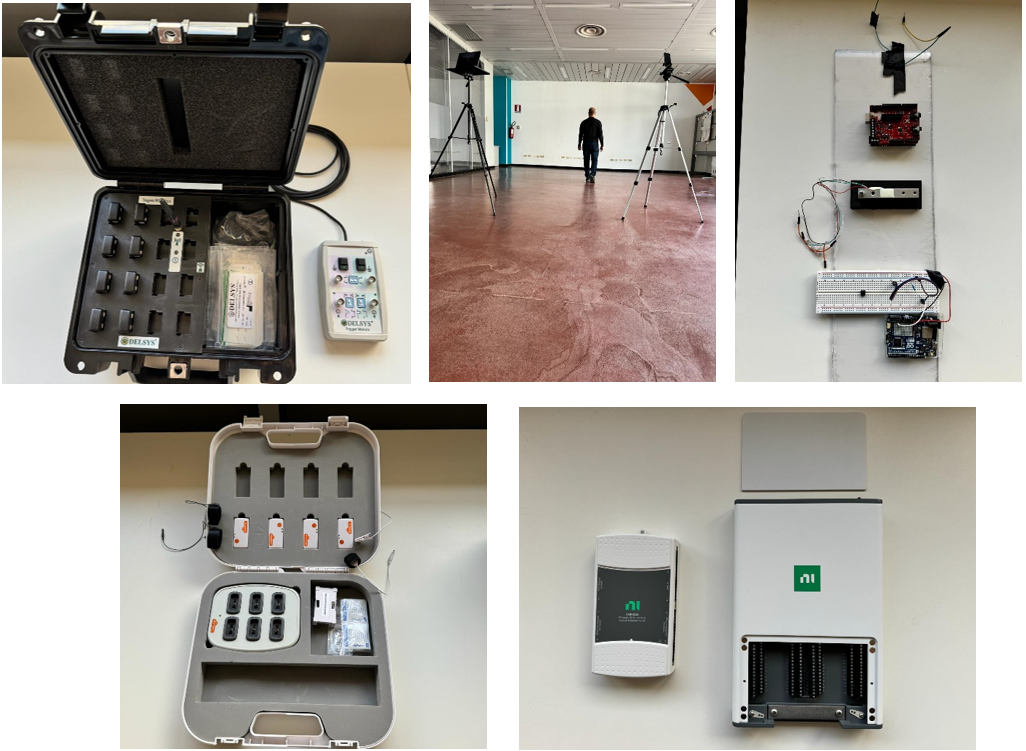
The laboratory focuses on teaching and research in various fields of Bioengineering (s.s.d. IBIO-01/A), in areas such as the quantitative analysis of human movement, the study of wearable sensor systems for monitoring and processing physiological parameters, biomedical instrumentation for diagnosis and therapy, and technologies for neuroengineering and rehabilitation.
Main activities:
Development of systems for the acquisition and monitoring of physiological parameters
Development of systems for motion analysis using wearable sensors
Markerless analysis of human motion
Processing and analysis of biomedical signals
Development and testing of Human-Machine Interfaces
Teaching within the L-8 degree programs in Biomedical Engineering and the LM-21 degree program in Bioengineering
Laboratory activities for third-mission orientation.
Main instrumentation:
Multichannel wireless surface EMG system
Wearable inertial sensor system
Data acquisition boards
Data processing boards
Augmented and virtual reality viewers
Sensors for biomedical measurements
Treadmills
Cameras for human motion analysis
Contacts: cristiano.demarchis@unime.it
Supervisor: prof. Carmine Ciofi
European Research Council (ERC):
PE3_4 PE7_5
Laboratory Location:
Block B, 2nd Floor, Room 230
Laboratory Type:
Research
Laboratory Brief Description:
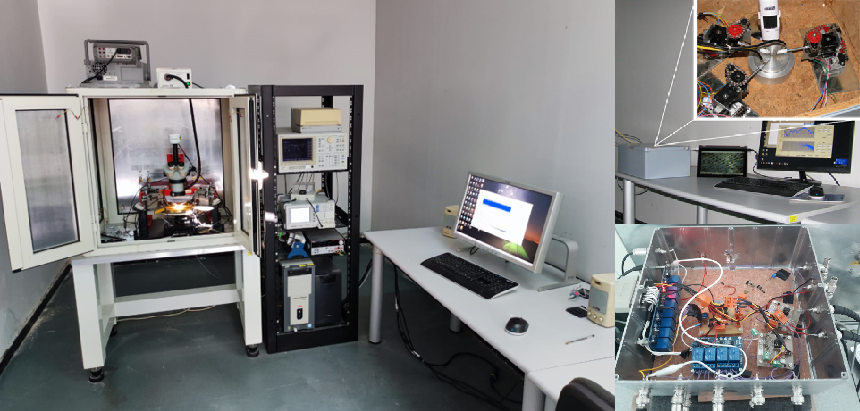
The Electronic Devices and Systems Laboratory hosts research activities related to the characterization, modeling, and simulation of various types of electronic devices and sensors. The primary characterization methodologies are DC, impedance, and low-frequency electrical noise measurements, while simulation is performed using dedicated software tools. Other activities involve the development and implementation of custom, highly sensitive instrumentation for low-current and low-frequency noise measurements.
Main activities:
DC electrical, impedance, and low-frequency noise characterization of wafer-level devices
DC electrical, impedance, and low-frequency noise characterization of package-level devices
Development and implementation of custom, high-sensitivity instrumentation for low-current and low-frequency noise measurements
CAD simulation of electronic devices
Main equipment:
Karl Suss PM5 Probe Station
HP 4155 Semiconductor Parameter Analyzer
BLCR Meter
GW-INSTEK LCR-8110G
National Instruments PC cards for spectral analysis
Custom Low Noise Amplifiers
Workstation network for advanced electronic device simulation
Contact: cciofi@unime.it
Supervisor: prof. Antonella Arena
European Research Council (ERC):
PE5_8 PE5_10
Laboratory Type:
Research
Laboratory Location:
Block B, 2nd Floor, Rooms 231 and 232
Laboratory Brief Description:
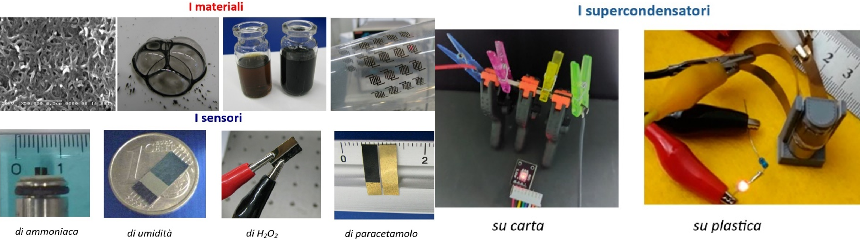
The laboratory's research focuses on the preparation and characterization of nanostructured carbon-based electronic conductive materials and polymer-matrix ionic conductors, for use in the construction of flexible electrochemical cells with potential applications ranging from sensing to energy storage.
Main Activities:
Development of electrodes for electrochemical applications and their characterization through DC electrical measurements, frequency-variable impedance measurements, and cyclic voltammetry. Development and characterization of prototypes of electrochemical sensors and supercapacitors on plastic or paper substrates.
Main instrumentation:
NanoSurf FlexAFM atomic force microscope, vacuum thermal evaporation system for thin films and spin coaters, UV-VIS-NIR microspectrophotometer, and setup for the electrical characterization of electrochemical cells.
Contacts: arenaa@unime.it
Supervisor: prof. Salvatore De Caro
European Research Council (ERC):
PE7_3
Laboratory Location:
Block B, Floor 2, Room 236
Laboratory Brief Description:
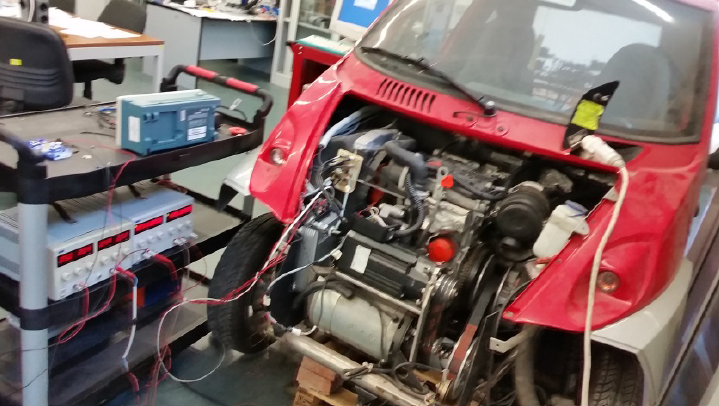
The Electrical Converters and Drives Laboratory conducts research and teaching in the field of ING-IND/32 – Electrical Converters, Machines, and Drives (GSD 09/IIND-08 – Electrical Energy Engineering). Its activities aim to develop high-efficiency power converters for renewable energy and electric mobility, with the goal of supporting the energy transition and contributing to Europe's commitments to decarbonization and pollution reduction.
Main Activities:
The Laboratory's main activities include the design and testing of power converters for renewable energy generation, electric mobility, and energy conversion; the prototyping and development of innovative systems and techniques for controlling electric motors for vehicles; and the reliability study and lifetime estimation of power electronic devices for automotive applications.
Main Instrumentation:
The Electric Converters and Drives Laboratory is equipped with advanced instrumentation, including oscilloscopes, voltage, current, torque, and speed sensors, DC and AC power supplies up to 10 kW, a network emulator, dSPACE control units, DC and AC electric motors, as well as tools for prototyping and experimentation.
Contacts: sdecaro@unime.it, sfoti@unime.it
Supervisor: prof. Graziella Scandurra
European Research Council (ERC):
PE7_4 PE7_5 PE7_11
Laboratory Location:
Block B, Floor 2, Room 238
Laboratory Type:
Research
Brief Description of the Laboratory:
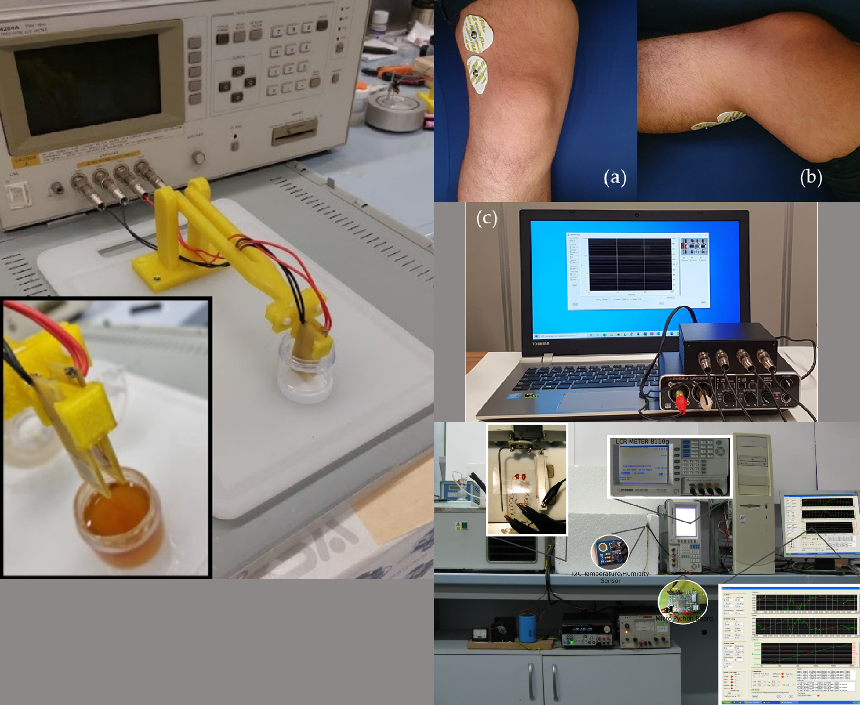
The laboratory's activities involve the design and development of dedicated instrumentation, with applications in any sector, with highly interdisciplinary characteristics. The primary sector involved is electronics, with an openness to sectors requesting support.
Main Activities:
Design and Development of Dedicated Instrumentation; Characterization of Electronic Devices and Materials; Impedance Spectroscopy; Food Engineering.
Main Instrumentation:
Agilent 34401A Multimeter; Agilent 33220A 20MHz Function/Arbitrary Waveform Generator; Agilent DSO7052A Digital Storage Oscilloscope; Agilent 34405A Multimeter; GW Instek LCR-8110G; portable impedance meter built in the lab.
Contact: gscandurra@unime.it
Supervisor: prof. Emanuele Cardillo
European Research Council (ERC):
PE7_6
Laboratory Location:
Block B, Floor 3, Room 330
Laboratory Type:
Educational
Laboratory Brief Description:
IINF-01/A- Electronics. 09/E3. ING-INF/01
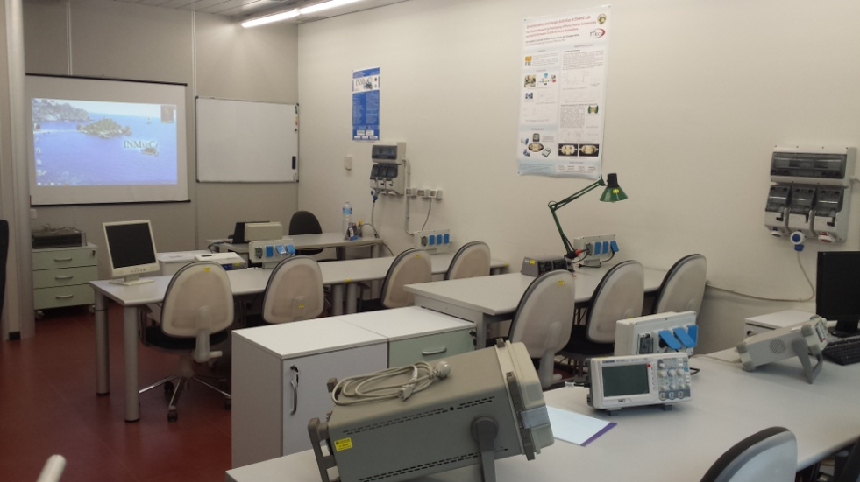
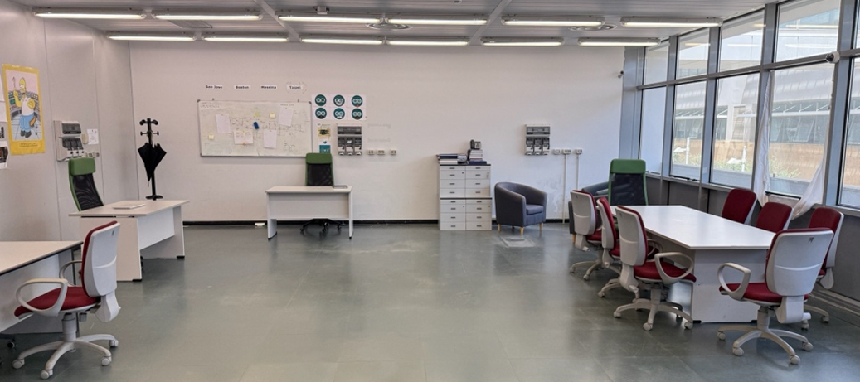
The Microwave Electronics Teaching Laboratory is equipped for lectures, seminars, internships, and student engineering theses related to topics covered in the courses Microwave Electronics 1, Principles and Applications of Microwave Electronics I, Principles and Applications of Microwave Electronics II, and Programmable Logic Devices. It has seating for 12, a lecturer's desk with a video projector, laptop, and a wall-mounted whiteboard, and both Ethernet and wireless internet access.
Main activities:
Lectures and seminars with the availability of a video projector and whiteboard. Internal internships for engineering students. Development of theses for engineering students related to the topics of the courses Microwave Electronics 1, Principles and Applications of Microwave Electronics I, Principles and Applications of Microwave Electronics II, and Programmable Logic Devices.
Main instrumentation:
EMC Analyzer/Spectrum Analyzer 8594EM Agilent Technologies (9 K Hz – 2.9 GHz).Line Impedance Stabilization Network 2x16 A Rolf Heine HF (9 KHz - 30 MHz).N.2 Sharebot Pro 3D Printer DIY Technology.Atten F2007-C Frequency Counter (0 - 2.7 GHz).N.2 SDR-KITS VNWA Vector Network Analyzer (1 KHz-1.3 GHz).N.4 U8002A Power Supplies Agilent Technologies (0-30 V, 5 A).N.3 Function/Arbitrary Waveform Generator SDG1050 Siglent (0 - 50 MHz).N.2 Digital Oscilloscope SDS1102CML Siglent (100 MHZ- 1Gs/sec).N.2 U3401A dual display multimeters Agilent Technologies (4.5 digits). Two Agilent Technologies U3402A dual display multimeters (5.5 digits). Two LAB-1 soldering stations with digital multimeter and power supply. Atten AT5010B spectrum analyzer (150 kHz-1 GHz). HP8350A signal generator with 83522A RF plug-in (0.1-2.4 GHz).
Contact: ecardillo@unime.it
Supervisor: prof. Salvatore Serrano, prof. Marica Amadeo
European Research Council (ERC):
PE6_11 PE6_12 PE7_3 PE7_7 PE7_8 PE7_9
Laboratory Location:
Block B, Floor 3, Room 331
Laboratory Type:
Research
Laboratory Brief Description:
The laboratory supports research activities in the areas IINF-03/A (Telecommunications), IINF-05/A (Information Processing Systems), and IINF-04/A (Automation). Research lines include: (i) modeling and simulation of telecommunications networks and systems in Wireless Sensor Networks, WiFi/Ad Hoc Networks, Wireless Mesh Networks, Cognitive Radio, and Information Centric Networking; (ii) development of signal processing methodologies based on soft computing techniques, applied to the analysis of audio/video, biometric, and biomedical signals and the creation of emotion-aware systems.
Main activities:
Support for the research activities of the Signal Processing group through the possibility of simulating telecommunications networks and systems, particularly those related to research in Wireless Sensor Networks, WiFi and Wireless Ad Hoc Networks, Wireless Mesh Networks, Cognitive Radio systems (Spectrum Sensing), and communications based on Information-Centric Networking. Support for research activities related to the development of innovative signal processing techniques based on soft computing (neural networks, stochastic models), particularly for the classification and recognition of audio/video, biomedical, and biometric signals, for music information retrieval (song recognition), and for the analysis and implementation of emotion-aware interactions and systems. Support for research activities related to the development of models for telecommunications systems and networks.
Main equipment:
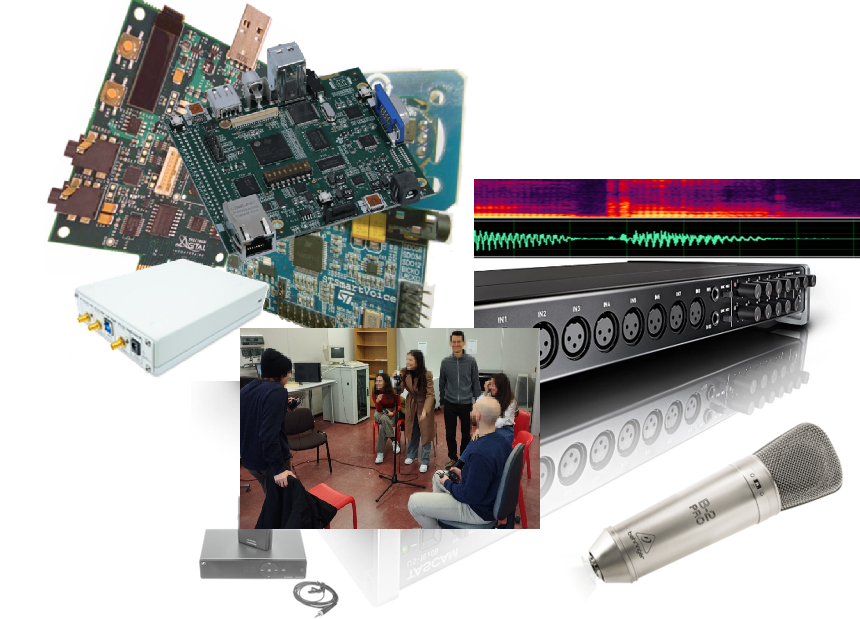
The laboratory is equipped with the necessary hardware for audio/video signal processing and for the simulation and modeling of telecommunications networks and systems.
Audio signal acquisition hardware is also available, specifically sensor arrays for identifying and tracking acoustic sources; a voice recording and digitization system, consisting of professional microphones, wireless devices, positioning accessories, and a multi-channel USB audio digitization interface; boards for Software Defined Radio (SDR) applications, which enable the flexible acquisition and transmission of radio signals over a wide frequency range; digital signal processing boards and development kits used for the development and prototyping of advanced DSP applications.
Various user terminals are also available.

Supervisor: prof. Anna Giordano
European Research Council (ERC):
PE3 PE7
Laboratory Location:
Block B, Floor 3, Room 332
Laboratory Type:
Research
Laboratory Brief Description:
The laboratory contains computational resources for the design of magnetic and spintronic devices.
Description of Main Activities:
The laboratory performs magnetometric measurements (DC and AC), characterizations of nanomaterials, and studies magnetoresistance phenomena. It supports research projects in solid-state physics and collaborates with other institutions for the development of magnetic sensors.
Main Instrumentation:
Measurement benches and control panels for magnetic and electrical circuits, programmable power supplies, magnetic field generation and measurement instruments, benchtop electronic instruments (multimeters, oscilloscopes), cabinets with test equipment, and modules for analyzing magnetic properties.
Contact: agiordano@unime.it
Supervisor: prof. Luca Patanè
European Research Council (ERC):
PE7_10 PE7_1 PE7_3
Laboratory Location:
Block B, 3rd floor, room 333
Laboratory Type:
Research and Teaching
Laboratory Brief Description:
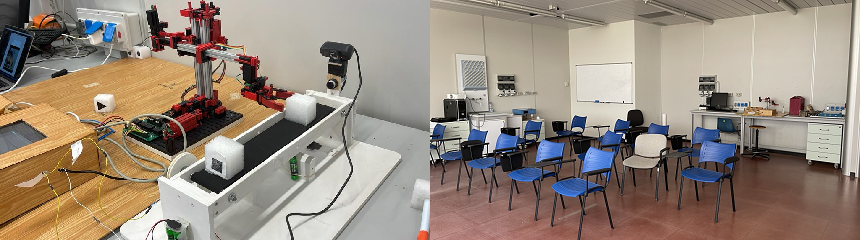
The Automation and Robotics Laboratory is equipped to host lectures, seminars, internships, and theses for engineering students on topics related to the Industrial Automation and Robotics and Bio-Inspired Robotics courses. Research activities include the development of models for locomotion control in legged robots and the implementation of feedforward and recurrent neural networks, including spiking networks, for the control of mobile robots.
Main activities:
Laboratory activities for the Industrial Automation and Robotics and Bio-inspired Robotics courses. Lectures and seminars. Internal internships for engineering students. Development of theses by engineering students related to the topics of the Industrial Automation and Robotics and Bio-inspired Robotics courses. Research in the field of biorobotics and locomotion control in legged robots. Development of bio-inspired models based on spiking networks for navigation control in mobile robots.
Main equipment:
Siemens 1200 PLC
Educational robotic arm
Arduino kit
Simulation workstation
Contacts: lpatane@unime.it
Supervisor: prof. Maria Gabriella Xibilia
European Research Council (ERC)
PE7_1 PE7_3
Laboratory Location:
Block B, 3rd floor, room 334
Laboratory Type:
Research and Teaching
Laboratory Brief Description:
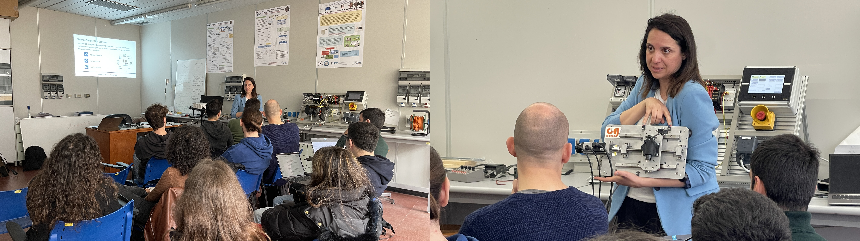
The Automatic Control Laboratory is equipped for lectures, seminars, internal internships, and student engineering theses related to topics developed within the Automatic Control, Industrial Automation, and Home Automation courses. Research activities related to the identification of nonlinear process models and the development of virtual sensors using soft computing and machine learning techniques are also conducted.
Main Activities:
Laboratory activities for the Automation and Control of Mechanical Systems course. Lectures and seminars. Internal internships for student engineers. Theses for student engineers related to the topics of the Automatic Control, Automation and Control of Mechanical Systems, and Soft Sensing and System Identification courses. Research in the field of identification and control of nonlinear processes. Research in the field of industrial automation and robotics.
Main instrumentation:
OMRON NX Series Modular PLC complete with input and output modules, encoder control board, integrated SQL database, ETHERCAT connection, integrated motion control;
The system for the design, configuration, commissioning, and testing of Home & Building Automation systems (currently under acquisition).
Contacts: mariagabriella.xibilia@unime.it
Supervisor: prof. Giovanni Merlino
European Research Council (ERC):
PE6
Lab Location:
Block B, Floor 3, Room 336
Lab Type:
Research and Teaching
Lab Brief Description:
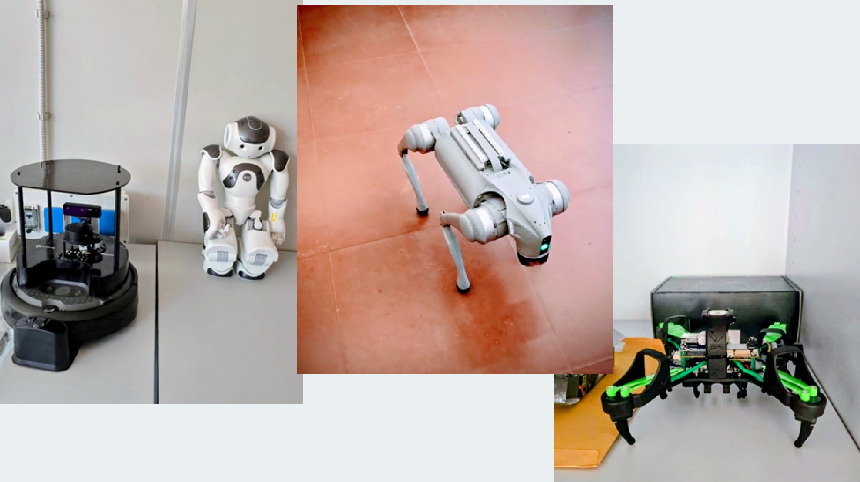
The IoT Lab is a research space dedicated to the study of distributed architectures for pervasive and decentralized cyber-physical systems, with a focus on edge-cloud orchestration, compute continuum, Industrial IoT, and digital twins. Activities include the integration of standard protocols and the development of solutions for the distributed coordination of fleets of devices and cooperating drones in edge-native scenarios.
The lab participates in national and European projects and is actively involved in CINI and SLICES-RI, promoting large-scale experiments.
Main activities:
The lab conducts applied research, technological experimentation, and teaching support in the fields of IoT, edge computing, and Industrial IoT, with an approach geared toward validating distributed solutions in realistic scenarios.
Activities span the compute continuum, from sensors to the cloud, and include dynamic resource orchestration, virtualization, containerization, microservice management, and digital twin modeling for real-time monitoring and control.
The lab integrates the study and integration of IoT and IIoT protocols, which are essential for interoperability in decentralized contexts. Solutions are developed for orchestrating fleets of IoT devices and for cooperative drone coordination, with a focus on protocols such as MAVLink.
Main equipment:
The lab is equipped with a distributed technology platform that enables experimentation along the entire compute continuum, from the cloud to edge devices. The on-premises cloud node, equipped with high-performance GPUs, is dedicated to orchestration, virtualization, and distributed workload management. The edge/fog component includes a variety of single-board devices and programmable microcontrollers, used for sensing, actuation, and local processing. The infrastructure also supports a large IoT device fleet, including smartphones and open-source wearables, designed to test interoperability and human-machine interaction scenarios through protocols such as BLE, MQTT, and REST. The environment is complemented by a Software-Defined Networking-enabled network and an edge-native architecture for distributed control. The lab also hosts a fleet of modular drones managed via edge nodes and standard protocols for coordination and cooperative communication.
Contact: gmerlino@unime.it
Supervisor: prof. Nicola Donato
European Research Council (ERC):
PE7_5
Laboratory Location:
Block B, Floor 2, Room 337
Laboratory Type:
Research and Teaching
Laboratory Brief Description:
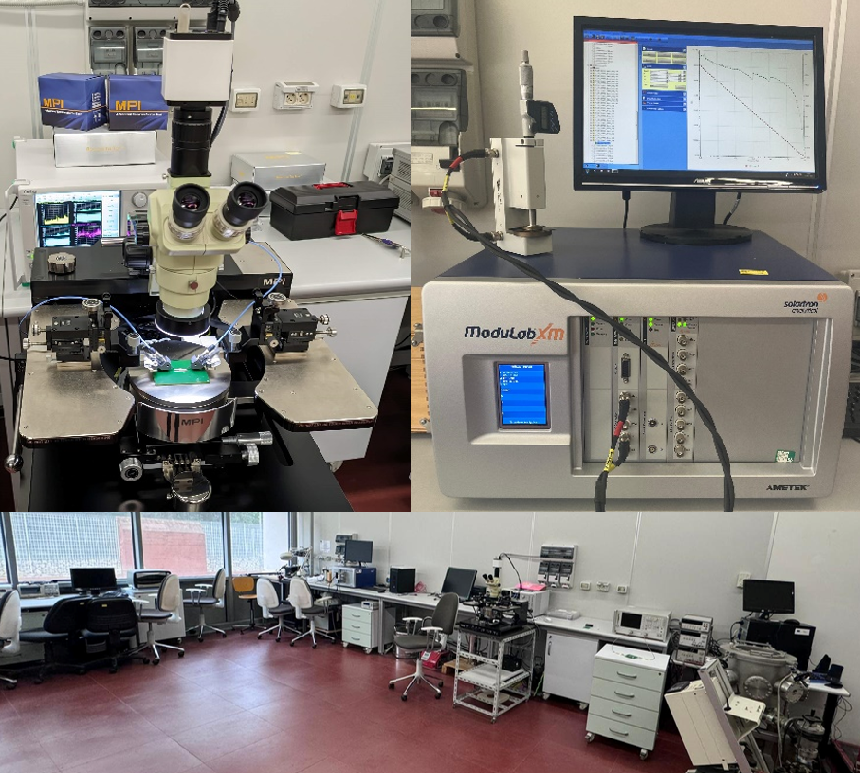
The laboratory is equipped with systems for the on-wafer and packaged electrical characterization of electronic devices (transistors, circuits, filters, antennas, and resonant systems). It also has systems for the electrical characterization of materials and devices at cryogenic temperatures. The predominantly involved scientific discipline is electrical and electronic measurements (IMIS-01/B, formerly ING-INF/07).
Main Activities:
The laboratory's activities involve both research and teaching for undergraduates and interns. Research and study focuses on the electrical characterization of electronic devices and materials for application fields ranging from bioengineering, microwave and millimeter-wave technologies, and nanotechnologies.
Main instrumentation:
Anritsu 70 GHz Vector Network Analyzer, expandable to 200 GHz. On-wafer microwave and millimeter-wave characterization system up to 70 GHz. Microwave cryogenic measurement system up to 40 GHz and 20 K. Impedance spectroscopy system for devices and materials up to 1 MHz. Single/dual-channel Keithley Source Measurement Unit (SMU).
Contact: nicola.donato@unime.it
Supervisor: prof. Nicola Donato
European Research Council (ERC):
PE7_5
Laboratory Location:
Block B, Floor 3, Room 338
Laboratory Type:
Research and Teaching
Laboratory Brief Description:
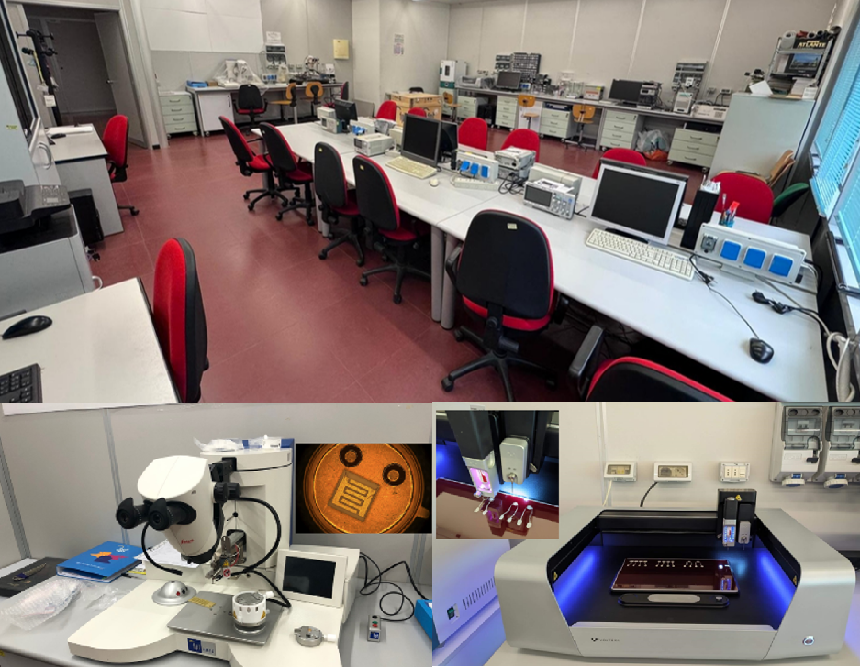
The laboratory is equipped with next-generation rapid prototyping systems for the production of sensors and their smart management and measurement interfaces. It also features a controlled-environment gas sensor characterization system. The predominantly involved scientific discipline is electrical and electronic measurements (IMIS-01/B, formerly ING-INF/07).
Main Activities:
The laboratory's activities involve both research and teaching for undergraduates and interns. Research and study topics focus on the prototyping and characterization of sensors and measurement systems. At the device level, flexible or micrometer-sized sensors can be created through the controlled deposition of nanostructured materials. At the system level, hardware interfaces are designed and implemented with custom electronics and embedded systems/microcontrollers. The design, development, and characterization of multiparametric measurement systems are used in application areas ranging from wearable systems for bioengineering to systems for environmental monitoring, sustainability, and security.
Main instrumentation:
Voltera rapid prototyping systems (NOVA, V-ONE) and Wedge/Wire Bonding systems (TPT, HB16). Electrical characterization system for gas sensors in controlled atmospheres equipped with a mass flow controller array and a Keithley 6487 picoammeter.
Contacts: nicola.donato@unime.it
Supervisor: prof. Emanuele Cardillo
European Research Council (ERC):
PE7_6
Laboratory Location:
3rd Floor - Block B - Room 339
Laboratory Type:
Research
Laboratory Brief Description:
EleMic Lab conducts research in the following areas:
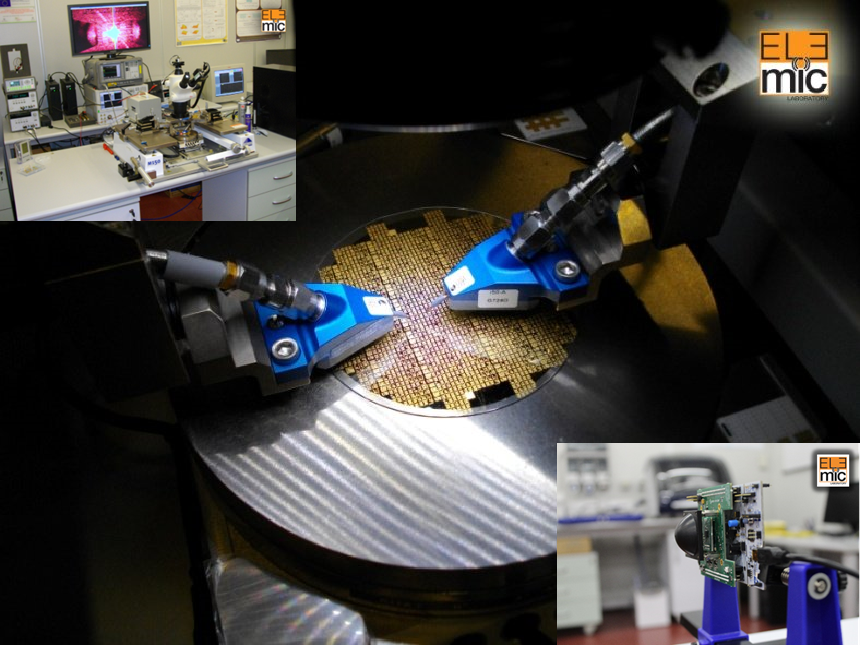
Linear measurements, modeling, and design of hybrid planar microprocessor-based (HMIC) devices and circuits in the microwave and millimeter-wave range for typical applications in advanced technology sectors such as telecommunications, avionics, aerospace, and radio astronomy. Design, construction, and testing of microwave and millimeter-wave radars for biomedical, industrial, military, and automotive applications. Design of microwave and millimeter-wave payloads for nanosatellites (CubeSats).
Main Activities:
EleMic Lab conducts research at very high frequencies, in the microwave and mmWave range. It has numerous collaborations with industry companies and international research groups for research and teaching purposes.
Our core activities include:
Design, manufacturing, and testing of microwave components, circuits, and systems using leading design CAD software. Linear characterization and measurement of noise and noise parameters of microwave components and circuits. Electromagnetic compatibility measurements. Development of compact radar systems for industrial, biomedical, and automotive applications. Development of circuits and systems for satellite applications.
Main instrumentation:
Agilent Technologies 8753E vector network analyzer (30 kHz – 6 GHz). Agilent Technologies E8364A vector network analyzer (45 MHz – 50 GHz). Agilent Technologies N9020A spectrum analyzer (20 Hz – 26.5 GHz). Agilent Technologies NP8975 noise figure and gain analyzer (10 MHz – 26.5 GHz). Maury Microwaves MT983BUO1 coaxial automatic tuner (2 – 26 GHz) with ATS software. HP E3631A and HP E3632A power supplies - Agilent Technologies HP 34411 digital multimeter. PC controller with Agilent Technologies HP VEE software. Microtech M150 Cascade wafer station with coplanar probes and WinCal calibration software. Tektronics oscilloscope TDS2022 dual channel 2 GS/sec. No. 2 High Current Bias Network 11612 Agilent Technologies 45 MHz – 26.5 GHz. Agilent Technologies APC-7 85050D calibration kit for coaxial calibrations up to 18 GHz. Agilent Technologies APC-7 85031B calibration kit for coaxial calibrations up to 18 GHz. Maury Microwave MT950G Transistor Test Fixture for packaged transistor measurements up to 18 GHz. Cadence Microwave Office microwave design (CAD) and analysis suite. Agilent Technologies 85056A 2.4 mm calibration kit for coaxial calibrations up to 50 GHz. Maury Microwaves 80050Q 3.5 mm calibration kit for coaxial calibrations up to 26.5 GHz. Keysight Technologies N5173B EXG X-Series CW-AM-FM waveform generator (9 kHz - 32 GHz). Line impedance stabilization network (LISN). Protomat S103. High-precision mechanical plotter.
Contact: ecardillo@unime.it
Supervisor: prof. Giuseppe Campobello
European Research Council (ERC):
PE6_11 PE7_7 PE7_8
Laboratory Location:
Block B, Floor 3, Room 340
Laboratory Type:
Research and Teaching
Laboratory Brief Description:
Research, conducted both at the university and in collaboration with companies and research institutions, focuses primarily on wireless communications networks and digital signal processing. Recent work focuses on wireless sensor networks, compression algorithms for biometric signals, and machine learning techniques for Industry 4.0.
Main activities:
Development of data coding, aggregation, and compression techniques; algorithms and protocols for the Internet of Things (IoT); communication protocols for wireless sensor networks; compression algorithms and source coding techniques for telecommunications and biomedical applications; channel coding techniques (error-correcting codes) for wireless sensor networks and IoT; digital signal processing algorithms for telecommunications, Industry 4.0, and bioengineering applications; development of frequency estimation algorithms for telecommunications, measurement systems, and Industry 4.0 applications; development of machine learning techniques for IoT and Industry 4.0 applications.
Main instrumentation:
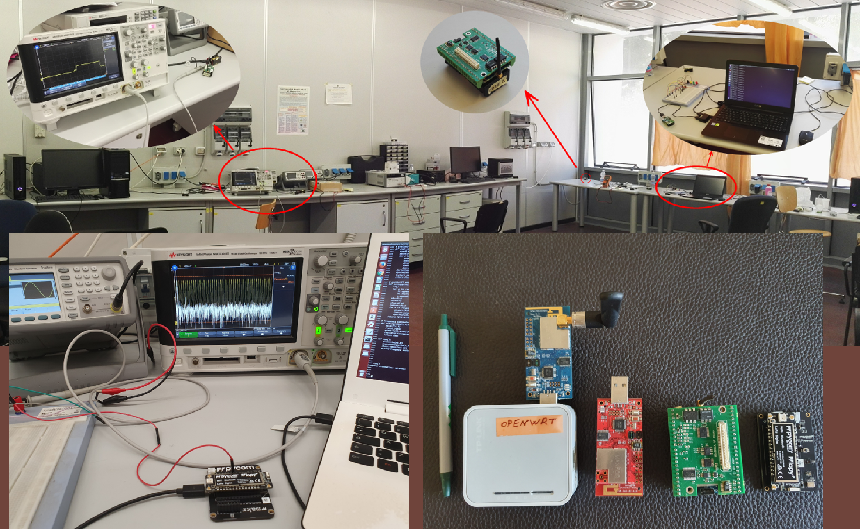
The laboratory is equipped with advanced instrumentation for the design, characterization, and validation of wireless communication systems and networks.
Specifically, the laboratory's electronic equipment includes:
Keysight N9322C spectrum analyzer, Anritsu MS2090A portable spectrum analyzer, HP-8753ES network analyzer, PCE-EM30 field strength meter, Keysight MSOX3012T digital oscilloscope, Keysight 33611A waveform generator, Keysight 34461A, U1231A digital multimeters, Keysight V3500A power meter
The laboratory also has various development boards and platforms for Software Defined Radio (USRP and NI29xx), wireless sensor networks (MicaZ, TelsoB, IRIS, LoPy4), DSP (TMS320C6416), and FPGA (Altera and Xilinx).
The laboratory also features a WKS545 workstation and five computers dedicated to network simulation, signal processing, and machine learning development.
Contact: gcampobello@unime.it
Supervisor: prof. Dario Bruneo
European Research Council (ERC):
PE6_7 PE6_11
Laboratory Location:
Block B, Floor 4, Room 430
Laboratory Type:
Research
Laboratory Brief Description:
The laboratory aims to investigate innovative techniques in the fields of artificial intelligence, bio-inspired systems, and robotics for the design of efficient solutions in multidisciplinary fields ranging from smart environments to Industry 4.0. To this end, the laboratory integrates expertise from the IINF-05/A and IINF-04/A research areas, promoting an interdisciplinary approach between AI, automation, and biological models.
Main Activities:
The laboratory's research activity focuses on the study, design, and implementation of intelligent solutions ranging from smart environments to industrial applications. Specifically, the activities are divided into two main strands. The first focuses on Cyber Physical Systems and the exploration of intelligent algorithms based on Deep Neural Networks, aimed at developing applications in various sectors, including anomaly detection, predictive maintenance, object detection, on-device training, etc.
The second strand focuses on the creation of bio-inspired artificial intelligence models, using spiking neural networks, neuromorphic algorithms, and mechanisms inspired by the functioning of the brain, with the aim of developing low-energy techniques, particularly suitable for edge devices and robotic applications.
Main equipment:
The laboratory is equipped with various prototyping boards (Arduino, Raspberry Pi, ST boards, NVIDIA Jetson, etc.), as well as electronic components for circuit design.
Contact: dbruneo@unime.it
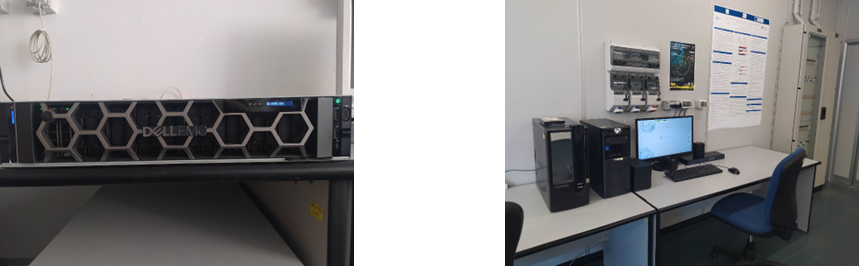
Supervisor: prof. Marco Lucio Scarpa
European Research Council (ERC):
PE6_3 PE6_4 PE6_12 PE7_3
Laboratory Location:
Block B, Floor 4, Room 433
Laboratory Type:
Research and Services
Laboratory Brief Description:
The laboratory focuses on system modeling and analysis using formal methods and software development, with a focus on performance. Activities include the use of analytical techniques and simulations to analyze general system behavior, as well as the development of algorithms for solving complex formal models. This integrated approach enables rigorous and optimized system quality assessment using engineering methods.
The main SSDs involved in the laboratory's activities are IINF-05/A and INFO-01/A.
Main Activities:
The laboratory's main activities focus on:
Development of performance-guaranteed software, optimized for response times, throughput, and resource use. Development of methodologies for ensuring Quality of Service (QoS) and Quality of Experience (QoE). Formal modeling of complex systems using Petri nets, automata, stochastic processes, and state models. Performance analysis of software and hardware systems using quantitative, analytical, and simulation methods. Development of algorithms for numerical or symbolic model resolution, including iterative and decomposition methods. Validation and verification of software systems using formal techniques and model checking. Production of software tools for model analysis, simulation, and visualization. Applied research in collaboration with public and private entities on real-world cases (e.g., embedded systems, networks, smart systems). Training and support for university teaching, including internal internships and thesis and final dissertations. Seminar activities.
Main Instrumentation:
The main equipment currently available for laboratory activities consists of two software development workstations and a server workstation based on a parallel multiprocessor architecture and equipped with an NVIDIA GPU. This workstation is used for the development of high-performance parallel applications and for the efficient analysis of analytical models (including AI-based models) and simulations. The laboratory is also equipped with 25 sensor nodes (MOTEs) for the analysis, development, and testing of applications based on Wireless Sensor Networks (WSNs).
Contact: mscarpa@unime.it
Supervisor: prof. Francesco Longo
European Research Council (ERC):
PE6_2
Laboratory Location:
Block B, Floor 4, Room 434
Laboratory Type:
Research and Teaching
Laboratory Brief Description:
The laboratory conducts scientific research, experimental development, and technology transfer in the fields of Computer Engineering, with a focus on cybersecurity, the Internet of Things (IoT), cyber-physical systems, and distributed cloud, fog, and edge architectures.
Its primary objective is to conceive, design, implement, test, and validate innovative high-TRL hardware and software solutions, including through involvement in research projects funded at the regional, national, and European levels, with the active participation of public bodies, universities, research centers, and industrial partners.
Main Activities:
The laboratory conducts design, development, integration, and validation of innovative solutions in the fields of IoT, cybersecurity, embedded systems, cloud-native computing, and distributed systems. Activities include testing secure protocols for decentralized environments, developing firmware and embedded software, assessing the resilience and performance of cloud/fog/edge architectures, risk analysis, and adopting zero-trust approaches. The lab provides support for industrial and academic research projects, technology benchmarking, proof-of-concept, rapid prototyping, experimentation in realistic environments, and consulting on security, distributed architectures, and hardware-software integration.
It also conducts advanced training, development of demonstration platforms, technology transfer, participation in multidisciplinary research consortia, and educational, orientation, and outreach initiatives aimed at secondary schools.
Main equipment:
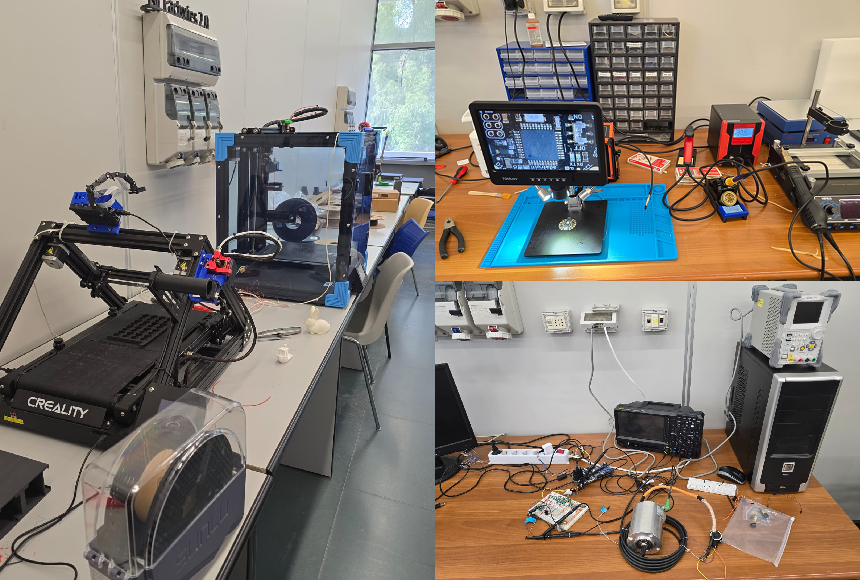
The lab is equipped with a fully equipped professional soldering station for the assembly and maintenance of electronic circuits, including a desoldering station and a preheating platform. A dedicated station for signal analysis and acquisition for digital protocols and communication buses is available, equipped with a digital oscilloscope and logic probes. The lab is also equipped with numerous embedded prototyping boards, including Raspberry Pi-based PLC platforms with LoRa, 4G, NB-IoT, and CAN interfaces. An optical station is also available for circuit inspection using a high-precision digital microscope. The lab's facilities are complemented by a set of commercial 3D printers and advanced prototypes developed in-house, designed for testing distributed and customized printing processes, including in collaborative and multi-user environments.
Contact: flongo@unime.it
Supervisor: prof. Gino Giusi
European Research Council (ERC):
PE7_3 PE7_4 PE7_5
Laboratory Location:
Block B, Floor 4, Room 436
Laboratory Type:
Research
Laboratory Brief Description:
The Electronic CAD lab carries out design, simulation, and prototyping of electronic systems for dedicated applications. Applications include signal acquisition and processing systems; low-frequency noise analysis; development of mixed-signal systems based on microcontrollers and/or FPGAs for the acquisition and processing of environmental parameters; and development of test fixtures for measurement applications.
Main Activities:
Development of mixed-signal electronic systems for special applications; development of firmware and support software.
Main Instrumentation:
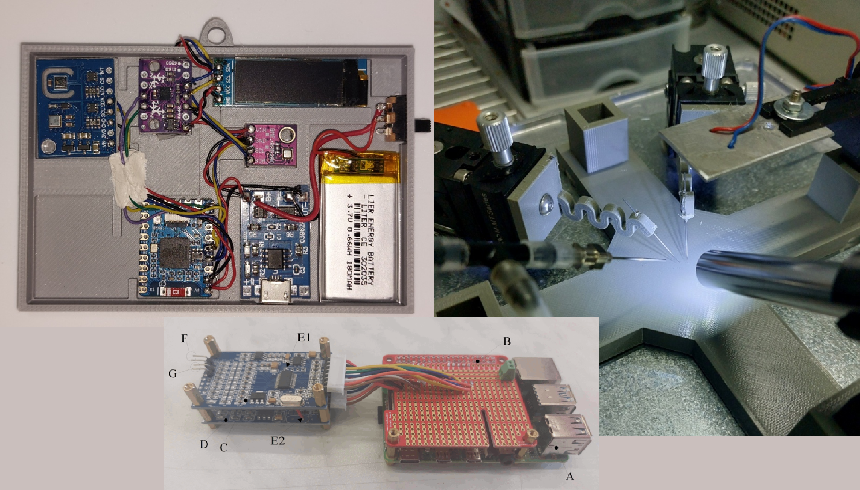
Software for application development on microcontrollers (Raspberry Pico, ESP32) and Intel (formerly Altera) and AMS-Xilinx FPGAs. Bamboo X1 Carbon 3D Printer
LPKF ProtoMat C30 PCB Prototyping System
Contact: ggiusi@unime.it
Supervisor: prof. Francesco Longo
European Research Council (ERC):
PE7_10
Laboratory Location:
Block C, Floor 6, Room 669
Laboratory Type:
Research and Teaching
Laboratory Brief Description:
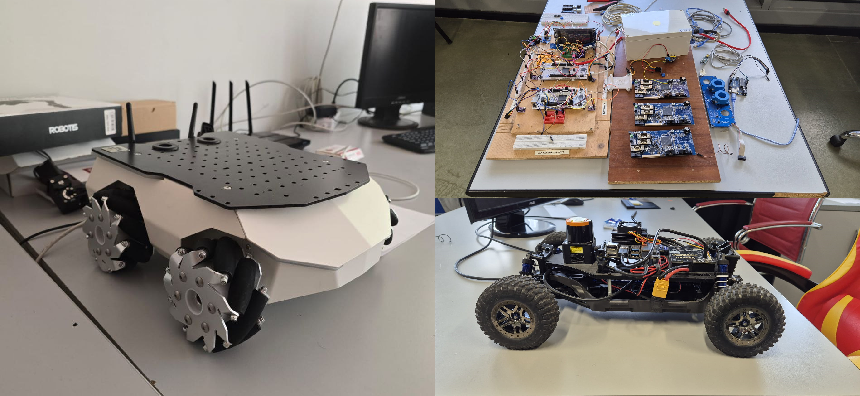
The ZED Laboratory is active in the research, development, and testing of autonomous driving technologies, with a particular focus on university competitions such as Formula SAE and F1TENTH. Activities include the integrated design of autonomous systems, including both software and hardware, as well as electronic power and fuel systems. The laboratory also handles the complete mechanical design of the vehicle, including the chassis, suspension, and other structural components.
Main Activities:
The ZED Laboratory develops and tests autonomous vehicle technologies, offering a wide range of activities spanning the entire development process, from design to validation. The main areas of operation include the development of solutions for autonomous driving systems, including perception algorithms, sensor fusion, localization, and decision-making; the integration of electronic components for control and energy management; and the design of key vehicle mechanical systems. The laboratory also provides support for the prototyping and optimization of autonomous platforms, with simulation and real-world testing. Services offered include technical consulting, research project support, competitive testing (FSAE, F1TENTH), and training on advanced technologies for smart mobility.
Main equipment:
The laboratory, along with the workshop, includes various equipment for the assembly of electrical and electronic components, such as a soldering station, crimping tools, electrician's scissors, and cable cutters. It also features workstations for testing and assembling vehicle batteries. The lab is also equipped with various prototyping boards, such as ST Nucleo, Arduino, and NVIDIA cards, useful for testing the development of real systems for inclusion in vehicles. There is also equipment for assembling structural elements, such as wrenches, drills, and pliers.
Considering the risks associated with using specific tools and components, the lab and workshop are also equipped with specific safety devices to ensure safe working conditions.
A 3D printer is also available for researching and prototyping components needed for vehicle development.
Contact: flongo@unime.it